Categories

Showing posts with label Silly Science. Show all posts

Monday, 23 February 2015

With Great Power comes never having to wait for the centriguge/vortex again

The Flash TV show has many flaws when it comes to portraying super-speed (usually the fact that if his speed was always as fast as it is sometimes depicted he'd be unstoppable or the that he can apparently hear faster than the speed of sound) but there's one thing in the intro that rings true if he's a scientist - he uses his super speed to vortex (possibly centrifuge) samples by hand.


It's what I'd be doing. I'd also be using it to sort flies super fast (taking care not to smash them) and better yet homogenise those 24 wrist-destroying Fly DNA samples in a row. Although I guess with super speed the 2 minute spin time would be interminable - although I could always be setting up a massive PCR experiment in that down-time.
Basically if I had that power crime-fighting would have to wait until I had a more secure income than science.

Monday, 12 January 2015

Performance Enhancing Drugs

My department began its trial of free filter-coffee and tea today and it got me thinking of how caffeine is a bedrock of research. I think the drop in publications could be easily measured in an institute where caffeine was banned. It's most obvious use is in keep people awake during those soul-crushing paper revision periods or when you're unfortunate enough to be doing an experiment that takes 12 hours plus to complete. It also comes in handy for spiking alertness during seminars and lab meetings and can lead to discussions/ideas that may never have occurred if you were half asleep. Then there's the social side of a group of scientists talking about their day over a cup of coffee.

Which leads me to the other drug of research - alcohol. Let's not dwell on the negative side of it in science but consider its role in getting scientists to network. I can't count the number of times (possibly due to the amount of drink?) I've chatted with other scientists over a beer and found they are working on something similar or useful to me that I'd be unaware of if I weren't chatting to them at a pub/social event. The other useful thing about the alcohol is that it often encourages some out-of-the-box ideas/collaborations which you both swear you will follow up first thing tomorrow. A lot of the time said ideas may not look so Nobel worthy when sober but occasionally they still do. The key thing here is that as you've got someone else involved your more likely to try those borderline cases which could be inspired (or a waste of time).

Then you have the less obvious drugs.

In terms of drug induced ideas you only have to look back to the 60s and 70s when it seems like any biochemist worth his/her salt was making and taking psychedelic drugs. If anyone ever wants to make a 60s version of breaking bad they could do worse than base it on north American biochemists of the era. It certainly didn't seem to harm Kary Mullis (of PCR fame) in any (scientific) way although it may have been the talking green raccoon alien that helped him? Come to think of it could make a great protagonist for a crazy scientist show set in the 60s/70s. I should get to work on that one.

Another drug that some scientists may not own up to using is cannabis. The obvious use is to help relaxation but I've heard several scientists tell me that it helps them concentrate. Some people just have too many ideas going on in their head at times and a bit of cannabis can help them focus on the task at hand. I guess "smart drugs" could also be used to the same effect and will probably become more common as younger generations who have become almost dependent on them for exams continue to use them at work.

I'm sure there are more drugs that have played a part in research. For the cigarette smoker I'm sure they help in a relaxation way - although it always seems a bit odd seeing researchers smoke outside a cancer research institute (they usually hide them away to avoid bad publicity). It's probably a good thing researchers are researching the effects of drugs on people too. There's probably an incentive to check on possible side-effects.

Wednesday, 19 November 2014

Biology on TV

Bit of a personal slam from a quote on "the Blacklist"

"anyone working with Cullen is doing so in isolation, illegally and for no good purpose"

As an aside, the show is fun but rarely has much biology in it. If anything it has the most glaring example of "why don't you perform a DNA test?" I can think of. It's like the show exists in a world where paternity testing doesn't exist.
Otherwise the biology is usually in the hands of people who could make billions using their amazing findings legitimately but decide to use them for "EEEVILL" instead. Case in point, the episode I quoted from where a biologist who came up with a cure for a disease decided to use it to blackmail people with as opposed to selling said cure. It would have been a dull episode though,
Another curious example of science was in an episode where [mild spoilers for an episode that aired a year ago] a scientist deliberately infects large groups of people with a disease (which he magically turned into a virally bourne version of a genetic disease) in order to find a person with natural immunity whom he could then study and find a cure. I'd like to see the reaction of the review panel looking at that grant outline!

Tuesday, 27 May 2014

Movie Science : X-men days of future past

I'm sure I've mentioned it before but the X-men cartoon and comics of the 90s probably bare a lot of the blame for me being a biologist. As such I still have a soft spot for them and was very impressed when I came out of the cinema having watched the latest instalment "Days of Future Past". Yes. I'm a big fan of the original comic storyline as well.

In terms of the science, I just have to accept that "mutant" is a license to do whatever you want, biology and physics be damned and I'm not complaining when it looks so cool. What I did find curious though was a bit of genetics in the film in which a character said they could detect people who could have mutant children or have grandchildren that could be mutants. This got me thinking, the films and comics often refer to a gene called the "x-gene" which seems to be the super awesome gene that results in all the mutant powers. I'm guessing it must be a transcription factor. The fact humans can have mutant children means the mutation is either spontaneous (a random mutation in the parent's germ line) or recessive (the mutant has to have two x-genes to be a mutant). But the grandchildren thing strikes me as odd because if it is recessive then you wouldn't necessarily have to wait an extra generation to get the mutant child. Unless two separate recessive mutant genes are required eg "x-gene" and "Z-gene". This might help explain why the mutants are so rare as well as the major variety in powers (maybe the other Z-gene encodes an epigenetic remodelling factor?).
That or the screenwriters didn't really consider the genetic implications of that sentence. In true Marvel tradition I'm providing a "no-prize" in case they need let off the hook.

If the genetics didn't make any sense on first read, hopefully this diagrams will help. Be warned it gets far too geeky from here on out.

Tuesday, 4 March 2014

30,000 year old Giant Virus - no longer on ice !!!

The BBC reported on a Proceedings of the National Academy of Science  about a "30,000 year old virus that has come back to life".  The interesting thing is that a virus can be frozen for such a long time and still function but it was clear the BBC wanted to make it sound like a horror film and I'm pretty sure that's what got so many people clicking on the story today. The researchers also seem glad to add fuel to the BBC's apocalyptic scenario of ancient/presumed eradicated viruses being unleashed due to global warming/mining.

The scenario of a giant killer virus from our ancient past does remind me of "the Thing" and several episodes of "the X-files" maybe now would be a good time for a topical horror film about giant viruses?
If I was a Hollywood screenwriter, I'd be writing the script for 2016's B-movie extravaganza. "it came from within the glacier" or "megasupervirus attacks". Here's some posters to help inspire them.


Or a new spin on John Carpenter's "the thing"?


Unfortunately the giant virus only infects amoebas and not human cells (phew) but they do point out that something like small pox could be frozen out there. It's always good to have another reason to be afraid of climate change.
Maybe the ice-age is the only reason mankind has made it this far and somewhere at one of the poles our nemesis is waiting...

Saturday, 1 March 2014

Control Freak - how did I get that hangover?

Recently I had an unpleasant allergic reaction to beer. Not in the "I had too much of it" way but more in the "it caused severe congestion, sinus blocking and even swollen eye-lids (not the result of a fight outside the pub)" way. It's not necessarily the alcohol and can be anything from histamines to wheat to some random ingredient in a beer that my body dislikes.

Wednesday, 30 October 2013

5 Scary Costumes for Biologists

Halloween is almost upon us and while everyone else is dressing as Miley Cyrus and/or her wrecking ball, here are some costumes that will strike fear into the bravest of biologists.


Thursday, 29 August 2013

Monday, 29 July 2013

The "hit" list

There is something decidedly sinister about this "updated" lab members list.


Feels like a scene from some serial killer blockbuster. Thankfully, I'm not on the list but I fear for those who are. I think an updated new list would be better on pretty much every level.


Friday, 26 July 2013

Hung Out To Dry

I noticed this in the stairwell at work today and was struck by the visual simile :)


Note: Not that the metaphor is directly associated with the person who made the poster!

Thursday, 18 July 2013

Temperature Sensitive

There has been a statistically significant span of "hot" (in comparison to British controls) weather in the UK for the past 2 weeks.

At first this rare occurrence is welcomed with national glee but after a week the media decides it has to be a sign of the apocalypse and issues weather warnings. The British also discover they have no small-talk when the weather is consistently good and so have to find things to complain about.

It makes me wonder whether there is a temperature sensitive mutation that occurs to denizens of the UK where after temperatures exceed 27 degrees we can no longer function? This would make sense if the UK was an isolated nation with a narrow gene pool but we aren't. This leads me to think there may be some kind of retrovirus that only exists in the UK. Upon infection it rewrites our DNA to be useless in warm conditions. This must be a virus that can only survive outside the host at temperatures below 27 degrees. I guess it makes sense that it would program the host to seek out mundane temperatures so that the virus can propagate.
The virus may have other personality-altering functions such as encouraging heavy drinking (a feature that is probably always being expressed). This could suggest the virus spreads via beer glasses or badly maintained urinals. It would also help explain it's prevalence in the UK and not other parts of the world.

I've never heard of a case of a virus being able to infect metals but I am starting to wonder whether this may be the case. Afterall, I can't understand why railway tracks become "unstable" in the UK at temperatures above 27 degrees. If this was true of all steel then surely huge parts of the world would be back to horse and cart or cars throughout their summers?

So I think this would make an excellent grant proposal to try and isolate this amazing virus. Not only could it help us under stand host behaviour modification but it could also be a breakthrough in materials science. It may be years away but imagine how nice it would be during the next heatwave (probably sometime in 2025) for the British government to provide an immunisation program against this virus (assuming it doesn't change us on a DNA level). Maybe then it would be possible for us all to enjoy the weather?

Of course we could just avoid the news while the weather is nice.

Sunday, 12 May 2013

What's my age again?


I turned 32 last month and have to admit it’s becoming harder to deny I’m getting old. The emphasis on early in “early thirties” is reaching its limit and I think it’s time to reassess what my age actually means in an attempt to sound younger.

Tuesday, 30 April 2013

Communication Breakdown

A friend of mine is giving a departmental talk this week. An email was sent announcing their talk which had the title;

"Splicing factor, histone modification enzyme, and transcription factor that are required for transposon silencing in Drosophila goatees"

This was pretty exciting as I've never noticed that flies have goatees but perhaps this was an amazing mutation or the result of a splicing factor, histone modification enzyme and transcription factor working in conjunction to create a goatee?
Maybe it would look something like this?

Friday, 22 March 2013

Yo Mama

Zach Wiener posted some excellent "yo mama" jokes for nerds. The full list is here but I'll quote the two biology ones.

"Yo mama's skin is so lumpy, the bacteria on it experience allopatric speciation"

and

"Yo mama's so scientifically illiterate she thinks ATP is where an indian live"


I'll try and think of one of my own but ATP sets a very standard.

Saturday, 16 March 2013

Harry Bioblogist and the time-travelling Gilson

I had a very odd dream the other day, suggesting I'd possibly been working too hard or not doing enough non-science things. It went a bit like this;

I was in the lab and discovered that my Gilson pipette could allow me to travel through time.


I guess if the "Doctor Who" franchise had a timelord called "the scientist" (would probably make a fun villain) instead of a "sonic screwdriver" he'd have a "temporal pipette".
There were rules to this time machine though. Instead of measuring out volume in microliters it measured time in years. It was a P1000 so it meant I had a thousand years to play with. Where the dream became dull (and indicative of too much work) was that rather than use it I thought about how I could use it. The assumption in the dream was that it would take you to any time from 0-1000AD. I was hesitant to use it, as I'd have got trapped in the past, but now I'm thinking the tip-ejecting button would return you to the present.

Anyway it seemed like a fun idea and possibly a bit too science oriented for a mainstream audience. If this was to be adapted into a "major" series. The temporal pipette would work as follows.

1) Set the date by setting the "volume"
2) Travel back in time by pressing the suction button in
3) Return to the present by pressing the "eject" button.

Alternatively for more flexibility the 0-1000 setting just represents the years travelled. pressing the suction in (after setting the time) goes backwards and pressing eject lets you go forward.
Clearly there's be a huge advantage in tracking down the P2000, P200 and P10s as they would give a larger range and allow for much more specific travel.

What other lab equipment could have magical sci-fi powers?

If a centrifuge was big enough and you could climb into it I'm sure it could spin you into another dimension. MASSIVE DISCLAIMER - DO NOT TRY THIS AT HOME OR IN THE LAB.


Thursday, 14 February 2013

Valentine's day for Biologists

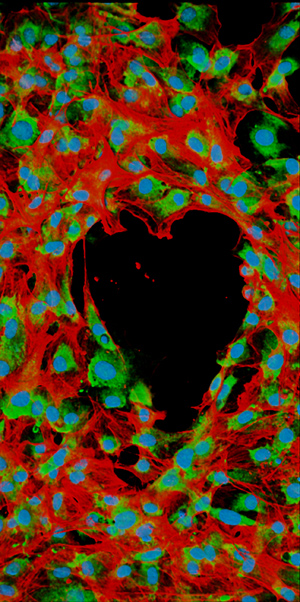
Being a scientist can be lonely, with little time for love - outside the love of science! To prove that we are still capable of emotion (and pattern recognition) here's a few pictures I found via a quick google search. In the true spirit of science I'll also tell you what they really are to dispel any undue sentimentality,


This one is taken from Helen Jacques and is a picture by Mathieu-Benoit Voisin and Doris Proebstl from London. "The researchers are studying how white blood cells move from the blood into into damaged tissue to cause inflammation; for example, after a heart attack. They were using using fluorescent pigments to stain two key players in this inflammatory process – pericyte cells from the blood vessel wall (stained red and blue) and collagen (green) – when looking through the microscope they noticed that the cells had arranged themselves into a heart shape"

This one is cheating a little but it's animated. You have to go to the web page to see it though.

This one is sweet...


That's the effect of tuberculosis in the lung of an infected mouse.

I guess the take home message is that scientists get bored when spending hours on a microscope and that horrible diseases can at least look romantic while they are infecting or killing you.

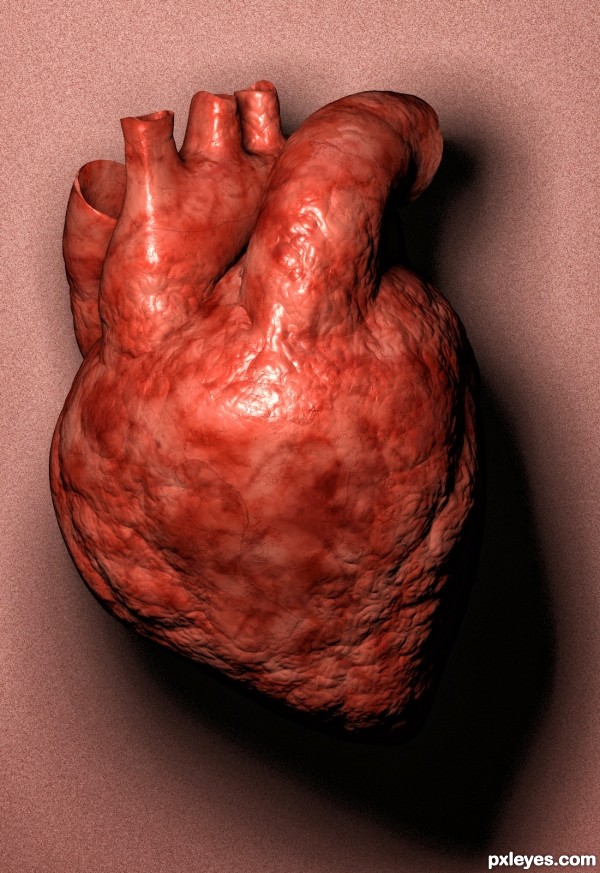
And let's not forget what the real thing looks like.


 Happy Valentine's day!


Thursday, 6 December 2012

Dog Driving School

Maybe a tenuous link to Biology but it is demonstrating how intelligent dogs can be and it does have DOGS DRIVING CARS!!!
The pose of the dog while driving is by far the best thing. Doesn't matter how bad your driving is as long as you look good.


The dog would truly become man's best friend if he could drive you home from the pub after a few drinks. Although the carnage that could occur when a dog is in heat is quite scary. Would the dogs rival white van drivers in their attempts to sniff other car's exhaust pipes?

Wednesday, 31 October 2012

Name the Biologist - Halloween edition

Time for some scary biologists - can you name them?


And this guy isn't a biologist but I'd definitely enjoy being able to study him - after taking all the appropriate risk assessments.

And finally, he doesn't scare me but I think he terrifies certain demographics...


Monday, 21 May 2012

Name the Biologist - week 10

Sticking with a theme at the moment, here is this week's mystery biologist.


Update: This one seems to be causing problems/lack of interest, maybe I should try and point you all in the right direction?

As for last week, the answer is behind my newly discovered spoiler text (do i have to explain how it works?). Carey Mulligan Kary Mullis the developer of the polymerase chain reaction (PCR) an absoultely essentially, if sometimes black art, for pretty much every biologist. Kary definitely seems to be a character if his views on AIDS, LSD and climtate change are any indication and I've been informed that his autobiography is a very entertaining read. Probably worth checking out.

Monday, 14 May 2012

Name the biologist - week 9

For people who've heard my frustrations at work (which I know I promised to update on the blog but haven't got round to yet) may be able to make a guess as to who this weeks mystery biologist is.